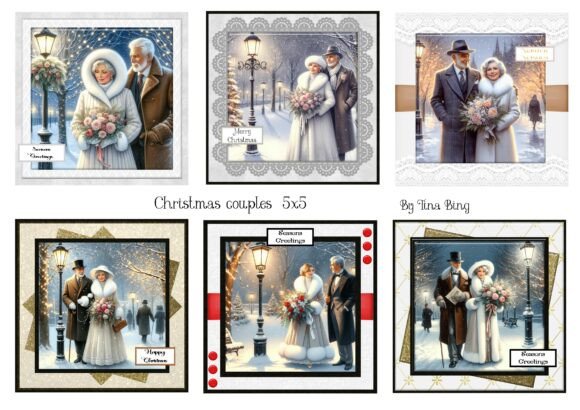
Reviewing Christmas Couples for Holiday Embroidery
As we approach the busiest season for handmade goods, the pressure to find designs that balance charm with technical reliability increases. I recently spent time evaluating Christmas Couples, a piece from the Illustrations category, to determine if it holds up under the needle for real-world commercial and personal projects. For embroidery designers, Etsy sellers, and craft business owners, the difference between a design that looks good on a screen and one that stitches out cleanly on textured fabric is significant. This review breaks down the practical application of this design, focusing on stitch behavior, fabric compatibility, and market appeal.
First Impressions and Visual Personality
The initial appeal of Christmas Couples lies in its narrative warmth. Unlike generic holiday icons, this design captures a specific mood of intimacy and celebration. Visually, it leans into the softness associated with high-quality Illustrations, avoiding harsh, jagged lines that can look amateurish when stitched. The layout suggests a balanced composition, which is crucial for maintaining structural integrity during the embroidery process. When I first loaded the digital embroidery file into my editing software, I looked immediately at the color transitions and density maps. The design appears to utilize a mix of fill stitch areas for body mass and satin stitch or running stitch elements for finer details. This combination is essential for creating depth without turning the fabric into a stiff cardboard-like patch.
For a small shop product, visual personality drives buyer engagement. This design feels inherently gift-oriented. It does not scream "mass-produced"; instead, it suggests a personalized gift crafted with care. This perception of value is vital for boutique branding and justifying higher price points on platforms like Etsy.
Real-World Application: The Sweatshirt Test
To truly understand how Christmas Couples performs, I simulated its use on a mid-weight cotton fleece sweatshirt. This is a staple item for holiday embroidery projects. The primary concern here is fabric texture. Fleece has a nap that can swallow small details. In this case, the design’s scale seemed appropriate for a left-chest placement or a larger back print. The key to success here was the stabilizer. I used a cut-away stabilizer to support the fill stitch areas, ensuring the design remained crisp after washing.
The result was promising. The thread colors popped against the heather grey fabric, demonstrating strong contrast. For an Etsy seller, this means the design photographs well for printable mockups and digital product previews. The clarity of the stitching contributes directly to customer trust. When a buyer sees clean edges and consistent density in your product photos, they perceive professionalism. This design supports that perception by avoiding overly complex micro-details that often turn into thread nests on plush fabrics.
Considerations for Smaller Items and Patches
While the design works well on apparel, applying it to smaller items requires caution. If you are considering this for an embroidered patch or a baby embroidery project on a onesie, hoop size becomes a critical factor. You must confirm the maximum dimensions of the design relative to your machine’s capabilities. On a curved surface like a cap, the design would need careful digitizing adjustments to prevent distortion. The center of the design should align with the crown’s peak, but any wide elements might wrap awkwardly around the curve. For baby clothes, where fabric is thin and stretchy, a lightweight tear-away stabilizer and a reduced stitch density might be necessary to prevent puckering. Always test the design on scrap fabric first, especially when working with delicate materials.
Technical Performance and Stitch Density
From a technical standpoint, the efficiency of Christmas Couples depends on its underlying digitizing. A well-digitized illustration will manage stitch density to prevent bulk. High-density areas can cause thread breaks or needle deflection, particularly if you are using metallic threads for holiday sparkle. I recommend reviewing the stitch count and density map before committing to a large production run. If the design relies heavily on satin stitch for borders, ensure those columns are not too wide, as this can lead to snagging. Running stitch elements should be used strategically to anchor fill areas without adding unnecessary bulk.
Thread color selection also plays a massive role in the final outcome. While the default colorway in the embroidery file may look appealing, customizing thread colors to match your brand consistency is a smart move. For example, swapping traditional reds and greens for muted earth tones can transform the design from a standard holiday item into a modern, boutique-style piece. Testing the design in black and white mockups helps identify contrast issues before you thread up the machine. If the details disappear in grayscale, they will likely get lost on dark fabric or low-contrast textiles.
Commercial Viability and Licensing
For commercial embroidery projects, understanding licensing is non-negotiable. Before selling finished items or using this as a design asset for client work, you must confirm the license terms provided with the purchase. Most designers allow the sale of physical finished products, such as tote bags, aprons, or pillow covers, but restrict the resale of the digital embroidery file itself. Clarifying this protects your craft business from legal issues and respects the original creator’s rights.
The versatility of Christmas Couples makes it a strong candidate for various revenue streams. It fits naturally into holiday gift collections, wedding gifts for winter ceremonies, and nursery decor. Its appeal spans across demographics, making it a safe bet for inventory planning. However, avoid using it on products that require frequent, heavy washing unless you have tested its durability. Dense stitch areas can hold up well, but loose threads or poor tension can unravel over time, affecting the longevity of your handmade product.
Final Verdict for Designers and Makers
In conclusion, Christmas Couples is a solid addition to a holiday design library, provided it is applied with technical awareness. It excels in creating emotional connection through its illustrative style, making it ideal for personalized gifts and custom apparel. Success lies in the preparation: choosing the right stabilizer, testing on similar fabric textures, and adjusting thread colors for optimal contrast. For the serious embroidery designer or small business owner, this design offers a blend of aesthetic charm and practical utility. Just remember to verify hoop size compatibility and license terms before starting your next big batch. With proper execution, this design can elevate your seasonal offerings and enhance your brand’s reputation for quality craftsmanship.