Reviewing Red Christmas Black Girl Clipart for Embroidery
As a designer who spends more time staring at stitch simulations than actual fabric, I have learned that not every cute graphic translates well to thread. We often fall in love with a digital image because it looks crisp on a screen, but embroidery is a tactile medium. It has weight, texture, and physical limitations. Recently, I evaluated the Red Christmas Black Girl Clipart PNG to determine its viability for real-world production. This isn’t just about whether the image is pretty; it is about whether it can survive the needle, the hoop, and the wash cycle while maintaining its charm.
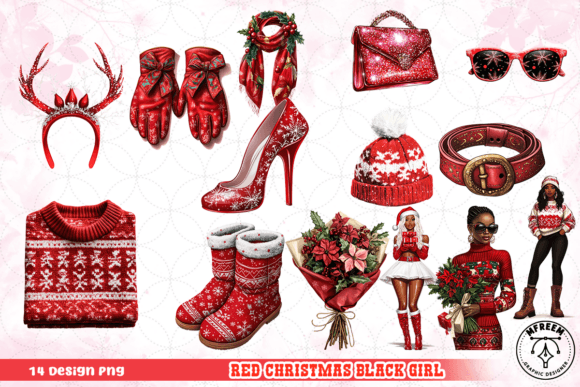
The first impression of this asset is warm and festive. The color palette relies heavily on rich reds, which are synonymous with holiday cheer, contrasted against the subject’s features. For those of us creating Illustrations for diverse audiences, finding high-quality, respectful, and joyful representations of Black girls during the holidays is invaluable. However, a PNG is a raster image. It is pixels, not vectors, and certainly not stitches. My immediate concern was how these pixel-based shapes would convert into a functional machine embroidery design. Would the details hold up, or would they turn into a muddy mess of thread?
Translating Pixels to Stitches: A Practical Assessment
When I look at a clipart file like this, I am mentally digitizing it. I am thinking about stitch density and direction. The red elements, likely representing clothing, bows, or accessories, suggest areas that would benefit from a satin stitch border to keep edges clean. Satin stitches provide that glossy, professional finish we see on boutique items. However, if the red areas are too wide, a satin stitch will snag. In those cases, I would switch to a fill stitch with a slight angle to add texture and durability.
The skin tones and facial features require a delicate touch. In embroidery, less is often more. Over-digitizing facial features can make a character look uncanny or stiff. I prefer using simple running stitch outlines for eyes and mouths, keeping the expression soft and approachable. This clipart’s style seems conducive to that simpler approach, which is a good sign for production speed and quality. If you are planning to use this for a custom apparel line, remember that the complexity of the design directly impacts your machine time and thread consumption.
Real-World Application: The Holiday Tote Scenario
To test the concept, I imagined a specific project: a canvas tote bag design for a local craft fair. Canvas is sturdy, providing a stable base for embroidery. I visualized placing the character centrally on the bag. The bold reds of the Red Christmas Black Girl Clipart PNG would pop beautifully against natural beige or white canvas. This contrast is crucial. Without it, the design gets lost.
In this scenario, the design serves as a statement piece. It is not just decoration; it is a representation. Customers buying handmade holiday gifts are often looking for items that feel personal and inclusive. Using this type of imagery signals that your craft business values diversity. It transforms a standard tote into a personalized gift that resonates emotionally. However, because tote bags are used frequently, the stitching must be secure. I would recommend a heavy-cut stabilizer to prevent the fabric from puckering under the weight of the thread, especially if the design covers a significant area.
Fabric Choices and Technical Constraints
Not every fabric behaves like canvas. If you are an Etsy seller looking to expand into baby embroidery, you might consider this design for a onesie or a bib. Here, caution is required. Baby skin is sensitive, and bulky stitching can be uncomfortable. I would advise avoiding dense fill stitches on the back of the garment. Using a soft tear-away stabilizer and ensuring no loose threads remain is non-negotiable. Furthermore, small details in the clipart might need to be simplified. Tiny elements can get lost in the nap of fleece or the stretch of cotton jersey.
Speaking of stretch, applying this to a sweatshirt embroidery project requires attention to hoop tension. Stretchy fabrics distort easily. If the hoop size is too tight, the fabric will warp, and the design will look skewed once removed. I always test on scrap fabric first. I cannot stress this enough. What looks perfect on your monitor might pull strangely on a heather grey sweatshirt. Check your thread colors against the fabric. A bright red thread might look different on dark navy versus light pink. Always run a physical test stitch-out.
Commercial Viability and Brand Consistency
For commercial embroidery projects, consistency is key. If you are building a brand around holiday-themed design assets, this clipart fits a specific niche: joyful, inclusive, and festive. It works well for holiday embroidery collections that include aprons, pillow covers, and tea towels. The visual appeal of the red tones creates a cohesive look when paired with other traditional Christmas colors like green and gold.
However, there is a legal and ethical layer to consider. Since this starts as a PNG clipart, you must confirm the licensing terms. Can you sell the finished embroidered item? Can you digitize it and sell the digital embroidery file? Most clipart licenses allow for physical end products but prohibit reselling the digital image itself. As a professional, I always read the fine print. Protecting your small shop product line from copyright issues is just as important as the stitching quality. Ensure you have the right to use the image for commercial purposes before listing it on your store.
Designer Notes for Best Results
Before you load this into your machine, consider these practical steps to ensure a high-quality finished product:
- Test on Scrap Fabric: Always stitch a sample on the same material you intend to use for the final product. This reveals tension issues and color clashes.
- Check Contrast: View the design in black and white. If the details disappear, the contrast is too low, and you may need to adjust thread shades or add outlining.
- Review Stitch Density: High density can cause fabric stiffness. Adjust your digitizing settings to balance coverage with flexibility.
- Inspect Small Details: Tiny elements in the original PNG may need to be enlarged or removed to stitch cleanly.
- Use Proper Stabilizer: Match the stabilizer to the fabric weight. Heavy fabrics need cut stabilizer; light fabrics need tear-away.
- Confirm Licensing: Verify that your use case aligns with the creator’s terms for commercial sales.
In conclusion, the Red Christmas Black Girl Clipart PNG offers a strong foundation for festive, inclusive embroidery projects. Its success depends entirely on how well you translate its digital charm into physical stitches. By respecting the limitations of the medium and choosing the right materials, you can create handmade products that are not only visually striking but also durable and meaningful. Whether for a custom apparel order or a batch of embroidered patch designs, thoughtful execution turns a simple image into a cherished keepsake.