Review: Watercolor Cute Christmas Angel Clipart for Embroidery
As a designer who spends more time staring at stitch simulations than actual fabric, I have learned to be skeptical of digital assets that look pretty on a screen but fail under the needle. The Watercolor Cute Christmas Angel Clipart caught my eye recently, not just for its aesthetic charm, but for the potential it holds in the crowded holiday market. When evaluating any new Illustrations for real-world application, I look beyond the initial visual appeal. I ask myself: How will this translate to thread? Will it hold up on a textured towel? Is it viable for a small business owner looking to scale their holiday inventory?
This review breaks down the practical realities of using this specific design in your next embroidery project. Whether you are an experienced digitizer or an Etsy seller sourcing ready-made assets, understanding the interplay between watercolor aesthetics and machine stitching is crucial for creating a high-quality finished product.
First Impressions: Mood and Visual Personality
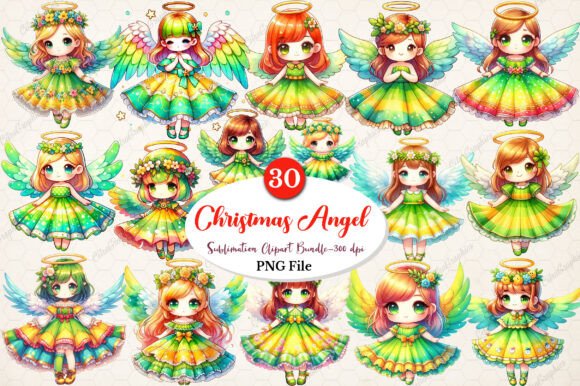
The immediate impression of the Watercolor Cute Christmas Angel Clipart is one of softness and nostalgia. Unlike rigid vector graphics, watercolor styles bring an organic, hand-painted feel that resonates deeply with customers seeking authentic, handmade product experiences. The layout typically features gentle curves and soft edges, which can be both a blessing and a challenge in embroidery.
The mood is undeniably festive yet understated. It avoids the neon brightness of commercial retail decorations, leaning instead into a boutique aesthetic. This visual personality makes it ideal for holiday embroidery projects that aim for elegance rather than loud spectacle. For a designer, this means the color palette likely relies on subtle gradients. In digital form, these gradients look seamless. In embroidery, however, we must consider how to replicate that softness without creating a muddy or overly dense stitch field.
Real-World Application: From Screen to Stitch
To truly test the viability of this design, I imagined a specific scenario: preparing a custom order for a local boutique’s holiday collection. The client wanted a series of tote bag design options and matching sweatshirt embroidery pieces. Here is how the Watercolor Cute Christmas Angel Clipart performs in these contexts.
For a canvas tote bag, the design’s inherent softness complements the natural texture of the fabric. A heavy fill stitch might overwhelm the material, so adapting the watercolor effect requires careful digitizing. If the source file is a raster image intended for print, it cannot be used directly as a machine embroidery design. It must be digitized or converted into an embroidery file that uses varying thread weights to mimic the watercolor bleed. If you are purchasing a pre-digitized version, check if it utilizes running stitch outlines to define the angel’s shape before filling. This technique preserves the delicate nature of the original Illustrations while ensuring structural integrity.
On a sweatshirt, the stakes are higher. Fleece and cotton blends have significant pile. The Watercolor Cute Christmas Angel Clipart needs sufficient contrast to remain visible. If the angel is pale and the sweatshirt is heather gray, the design may vanish. In this case, I recommend adding a subtle backing or choosing thread colors that pop against the fabric. The cute aspect of the angel appeals strongly to the baby embroidery market as well. Imagine this on a muslin swaddle or a onesie. The soft aesthetic aligns perfectly with nursery decor, making it a strong contender for personalized gift items.
Navigating Technical Challenges
While the design is visually appealing, there are areas where caution is necessary. Watercolor styles often rely on transparency and blending, which do not exist in traditional embroidery. You cannot stitch "transparent" thread. Therefore, the stitch density becomes a critical factor.
If you are working with small hoop sizes, such as a 4x4 inch hoop for an embroidered patch or a cap, details may get lost. Tiny corners in the angel’s wings or halo might bunch up if the digitizer did not account for pull compensation. Always inspect the design at 100% zoom in your software. Look for excessive overlaps or tiny, isolated stitches that could cause thread breaks.
Fabric choice also dictates success. On thin or stretchy fabrics, a dense watercolor-style fill can cause puckering. Using the correct stabilizer is non-negotiable. For knits, a cut-away stabilizer provides the necessary support. For woven towels, a tear-away might suffice, but test first. Dark fabrics present another hurdle. If the Watercolor Cute Christmas Angel Clipart relies on light pastels, stitching it directly onto navy or black fabric will result in poor visibility. You may need to incorporate an underlay or choose a lighter garment color to maintain the design’s integrity.
Enhancing Brand Value and Customer Trust
For Etsy seller accounts and small shop product lines, consistency is key. Using high-quality assets like this clipart can elevate your brand perception. Customers associate clean, well-executed embroidery with professionalism. When the thread colors are chosen thoughtfully to match the watercolor vibe, the final item feels curated and expensive.
This design also works well for printable mockup creation. Before stitching a single thread, you can place the digital asset on photos of blank apparel to gauge customer interest. This reduces waste and helps you determine which custom apparel items will sell best. If the mockup receives engagement, you know the design has market fit. This strategic approach turns a simple design assets purchase into a data-driven business decision.
Practical Notes for Designers and Makers
Before committing to a large production run of commercial embroidery items, follow these steps:
- Test on Scrap Fabric: Never skip this step. Stitch the design on the exact fabric type you plan to use for the final product. Check for puckering, thread breaks, and color accuracy.
- Check Thread Contrast: Lay your physical thread spools next to the fabric. Digital screens lie; physical threads do not. Ensure the Watercolor Cute Christmas Angel Clipart stands out clearly.
- Review Stitch Density: If you are digitizing it yourself, keep the density moderate. Too dense, and the fabric stiffens; too sparse, and the fabric shows through, ruining the watercolor illusion.
- Confirm Licensing: If you plan to sell items made with this design, verify the license terms. Some digital embroidery file creators allow personal use only, while others permit commercial sales. Never assume.
- Mockup in Black and White: Convert the design to grayscale in your software. This helps you see value contrast without the distraction of color, ensuring the shape remains recognizable.
In conclusion, the Watercolor Cute Christmas Angel Clipart offers a delightful blend of whimsy and warmth that fits seamlessly into the modern handmade marketplace. However, its success depends entirely on execution. By respecting the technical limitations of embroidery and choosing the right materials, you can transform this digital illustration into a tangible, cherished holiday gift or bestselling craft business item. Treat it with the care it deserves, and it will reward you with engaged customers and beautiful results.