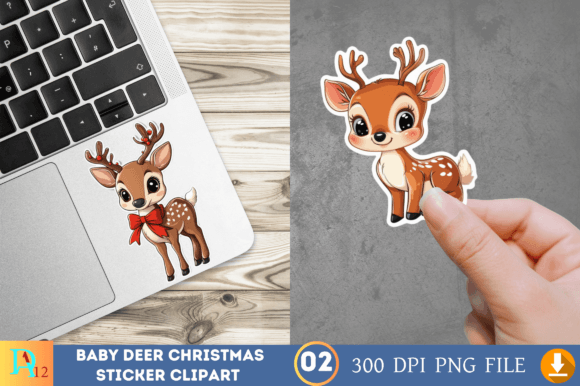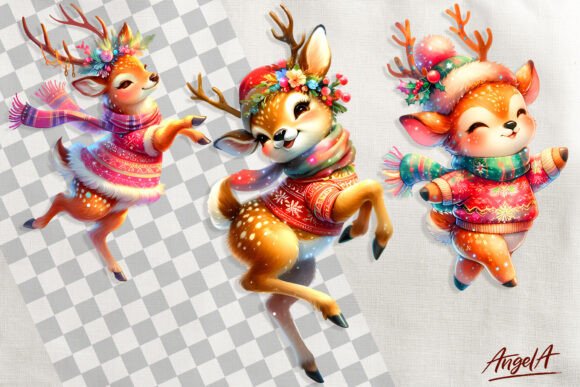
Christmas Clipart, Animal Clipart, Deer Illustrations
As a graphic designer who spends countless hours curating assets for client campaigns, I have learned that the difference between a good design and a great one often lies in the details. Recently, I was tasked with developing a seasonal brand identity for a boutique candle company launching a winter collection. The brief called for warmth, nostalgia, and a touch of woodland elegance. This is where Christmas Clipart, Animal Clipart, Deer became a pivotal element in our creative process. Reviewing these assets was not just about finding a pretty picture; it was about evaluating how they would function within a cohesive brand identity and support the overall visual hierarchy of the project.
First Impressions: Mood and Visual Style
When I first opened the file set for Christmas Clipart, Animal Clipart, Deer, the immediate impression was one of refined simplicity. In an era where modern design often leans toward minimalism, these illustrations strike a balance between decorative charm and professional restraint. The lines are clean, suggesting high-quality vector origins, which is crucial for scalability. The mood created is distinctly festive without being overly chaotic. It evokes the quiet beauty of a winter forest, making it ideal for brands that want to convey sophistication rather than loud, commercial holiday cheer.
For a handmade business or a boutique retailer, this aesthetic is gold. It does not scream for attention; instead, it invites the viewer in. This subtle emotional appeal is vital for building visual trust with an audience that values craftsmanship. Whether used in editorial design for a holiday lookbook or as a accent in social media graphics, the asset feels intentional and polished.
Real-World Application in Client Projects
The true test of any graphic design asset is its versatility across various mediums. During the development phase for our candle brand, we explored several applications for the Christmas Clipart, Animal Clipart, Deer illustrations. Here is how they performed in real design situations:
- Packaging Design: We placed the deer illustration on kraft paper labels. The contrast between the organic texture of the paper and the crisp lines of the clipart created a tactile, premium feel. It worked exceptionally well for product mockups intended for e-commerce listings.
- Print-on-Demand Merchandise: For the client’s accompanying line of tote bags and mugs, the asset served as the central focal point. Because the design was isolated with a transparent background, it integrated seamlessly into the sublimation design workflow, ensuring no unwanted white boxes appeared around the image.
- Social Media and Digital Ads: We used the deer motif in Instagram stories and Pinterest pins. When paired with a soft, muted color palette, the illustration helped stop the scroll. It provided enough visual interest to engage users without overwhelming the copy.
- Printable Wall Art: The client also wanted to offer digital downloads. The resolution and clarity of the PNG design files meant they could be printed at large sizes for home decor, appealing to customers looking for affordable yet stylish printable design options.
Strategic Placement and Visual Hierarchy
Understanding where to place these illustrations is key to maintaining a professional layout. In our project, the Christmas Clipart, Animal Clipart, Deer worked best in large layout areas where it could breathe. Using it as a hero graphic on the homepage of the client’s website allowed the intricate details of the antlers and posture to be appreciated. It also served beautifully as a decorative accent on invitation cards, framing the text without competing with it.
However, designers must be cautious. These assets should be used carefully in crowded layouts. If you pack too many elements around the deer, you lose the elegance that makes it effective. I found that it struggled in very small sizes, such as favicon icons or tiny footer logos, where the finer details might blur. Additionally, for projects requiring strict corporate minimalism or high-contrast accessibility standards, the delicate lines might need thickening or simplification. Always consider the visual hierarchy; the clipart should support the message, not distract from it.
Technical Considerations for Professional Use
Before delivering any final files to a client, I run a series of technical checks. Here are my practical designer notes for anyone incorporating Christmas Clipart, Animal Clipart, Deer into their work:
- Test in Black and White: Convert the asset to grayscale to ensure it holds up without color. This is essential for single-color printing methods often used in Cricut projects or embossed stationery.
- Check Contrast: Preview the illustration on both light and dark backgrounds. While PNG transparency helps, ensure there is enough contrast for readability, especially if text is overlaid.
- Inspect File Formats: Verify if you have access to SVG design files for infinite scalability in logo design or large-format printing. Vector files allow you to edit nodes and adjust line weights, which is invaluable for customizing the asset to fit specific small business branding needs.
- Font Pairing: Experiment with typography. I found that pairing the deer illustration with a classic serif font enhanced its traditional feel, while a clean sans-serif gave it a contemporary edge. Avoid overly ornate script fonts that might clash with the detailed lines of the animal.
- Licensing Verification: Always confirm the commercial license terms. If you are creating products for sale on Etsy or through print-on-demand services, you must ensure the asset is cleared for commercial use. This protects both you and your client from legal issues.
Enhancing Brand Consistency and Engagement
Ultimately, the goal of using Christmas Clipart, Animal Clipart, Deer is to enhance the overall impression of the design project. When used correctly, it contributes to brand consistency by reinforcing a narrative of nature, warmth, and tradition. It aids in audience engagement by providing a recognizable and emotionally resonant visual cue. In the competitive landscape of the creative marketplace, having distinct, high-quality design assets can elevate a generic campaign into a memorable brand experience.
For digital sellers and content creators, this type of illustration is a versatile tool. It can be repurposed across a design bundle including stickers, tags, and web banners. By treating the clipart not just as decoration but as a strategic component of your marketing visuals, you ensure that every touchpoint feels cohesive and professional. Whether you are designing for a local event, an online product launch, or a seasonal editorial feature, these illustrations offer the flexibility and polish required for high-stakes client work.
In conclusion, Christmas Clipart, Animal Clipart, Deer is more than just a seasonal graphic. It is a functional, aesthetically pleasing tool that, when handled with design expertise, can significantly uplift the quality of your creative output. By paying attention to placement, technical specifications, and brand alignment, you can leverage these illustrations to create designs that are not only beautiful but also effective in achieving business goals.